Alexis Rockman: Shipwrecks
March 6 to May 31, 2021: Peabody Essex Museum
June 12 to July 26, 2021: Guild Hall
September 24 to November 27, 2022: Art @ Bainbridge, Princeton University Art Museum
Guild Hall of East Hampton is proud to present Alexis Rockman: Shipwrecks. This exhibition of new paintings and works on paper by American artist Alexis Rockman looks at the world’s waterways as a network by which all of world history has traveled. The transport of language, culture, art, architecture, cuisine, religion, disease, warfare, and biology can all be traced along the the routes of seafaring vessels dating back to and in some cases pre-dating the earliest civilizations. Through depictions of historic and obscure shipwrecks and their lost cargoes, Alexis Rockman addresses the impact—both factual and extrapolative—that the migration of goods, people, plants and animals has had on the planet. This timely exhibition is inspired by both impending climate disaster and the current largest human migration in history, taking place in part by waterway.
Intentionally highlighting non-Western depictions of waterborne vessels and journeys, Alexis Rockman: Shipwrecks departs from traditional eurocentric maritime images associated with the Age of Exploration and is inclusive of other periods and global regions that contributed to the history of seafaring.
Image: Alexis Rockman. The Wreck of the Brig Helen. 2017, Oil on Dibond, 56 x 44 inches.
Guild Hall
Andrea Grover became the Executive Director of Guild Hall, East Hampton in September 2016.
Mission: Guild Hall is the cultural heart of the East End: a museum, performing arts, and education center, founded in 1931. We invite everyone to experience the endless possibilities of the arts: to open minds to what art can be; inspire creativity and conversation; and have fun.
Under her leadership, Guild Hall has initiated the Guild Hall Teen Arts Council, created a 2020-2025 Strategic Plan, expanded opportunities and fees to artists and performers, and embarked on a $29MM facility-wide capital improvements project, ushering in an era of renewal and new audiences.
Radical Seafaring
Parrish Art Museum | Water Mill, NY
May 8 — July 24, 2016
Radical Seafaring is a multidisciplinary exhibition, publication, and program initiative that will include two-dimensional works, sculptural objects, vessels, models, film and video, off-site commissions, and boat trips around East End waterways.
Under the direction of Andrea Grover, Century Arts Foundation Curator of Special Projects, the exhibition features twenty-five artists with works that range from artist-made vessels, to documentation of creative expeditions, to speculative designs for alternative communities on the water. The exhibition begins with conceptual and performance art of the 1960s and 70s and extends to recent phenomenological research and site-specific works that involve relocating the studio, the laboratory, or the performance space to the water. The increasing number of works created on the water by contemporary artists in the last decade is approaching the critical mass of a movement like Land art, only at sea.
The exhibition is divided into four themes: Exploration (the quest for new experiences, the ineffable, and living in an exhilarated state), Liberation (self-reliance, freedom from terrestrial social contracts, the desire to shape one’s world, and Utopian impulses), Fieldwork (hands-on, methodological intelligence gathering about the environment, such as an artist laboratory at sea), and Speculation (waterways as a tabula rasa on which other realities can be built).
The phenomenological works in Radical Seafaring represent a new form of expression that is especially powerful and timely as climatologists anticipate the effects of rising sea levels, changes in weather patterns, and the impact on coastal zones—especially when one considers that half the world’s population lives within 200 miles of a sea coast. The artists featured in Radical Seafaring figure prominently at the center of a universal and yet contemporary inquiry: how do we live in a natural world from which we are detached not only physically but emotionally and intellectually. These artists apply direct engagement strategies that remove this distance and reignite a sensual, heuristic, and watchful understanding of the water.
The notion of the artist’s studio in the world rather than separated from is descended from art movements like land, environmental, and conceptual art since the 1960s with forebears like Gordon Matta-Clark, Dennis Oppenheim, and Robert Smithson. The artists in Radical Seafaring are a continuation of these interdisciplinary, collaborative, and site-specific approaches. By narrowing this vast area of inquiry to projects on the water, Radical Seafaring provides focus and clarity to widespread creative strategies that embrace the world outside.
Artists
Bas Jan Ader, Ant Farm, Atelier Van Lieshout, Scott Bluedorn, George Brecht, Bruce High Quality Foundation, Chris Burden, The Center for Land Use Interpretation, Steve Badgett and Chris Taylor, Michael Combs, Mark Dion, R. Buckminster Fuller, Cesar Harada, Constance Hockaday, Courtney M. Leonard, Mare Liberum, Marie Lorenz, Mary Mattingly, Vik Muniz, Dennis Oppenheim, The PLAY, Pedro Reyes, Duke Riley, Robert Smithson, Simon Starling, and Swoon
Exhibition Catalogue
Radical Seafaring
Andrea Grover, with contributions by Sasha Archibald, Alexander Dumbadze, Christopher French, Dylan Gauthier, Andrea Grover, and Terrie Sultan
May 2016, Parrish Art Museum, 160 pages with 110 illustrations
$49.95, Distributed worldwide by DelMonico Books • Prestel
An in-depth study of an increasingly important mode of 21st-century artistic practice, this exciting and multi-faceted book makes a direct connection between today's seafaring art and the performance pieces of the 1960s and '70s.
Radical Seafaring and the accompanying catalogue are made possible by an Emily Hall Tremaine Exhibition Award. Generous support has also been provided by The Andy Warhol Foundation for the Visual Arts, an Art Dealers Association of America (ADAA) Foundation Curatorial Award and the Association of Art Museum Curators, The European Fine Art Fair Maastricht, John and Anne Mullen, and David and Jane Walentas. Additional support for the catalogue was provided by the Elizabeth Firestone Graham Foundation.
The Emily Hall Tremaine Exhibition Award program was founded in 1989 to honor Emily Hall Tremaine. It rewards innovation and experimentation among curators by supporting thematic exhibitions that challenge audiences and expand the boundaries of contemporary art.
Photos:
Swoon, Swimming Cities of Serenissima, 2009. Photo by Tod Seelie.
Mary Mattingly, The Waterpod Project, 2009. Photo by Mike Nagel.
The PLAY, Current of Contemporary Art, 1969. © The PLAY
Constance Hockaday, All These Darlings and Now Us, 2014. Photo by Laura Morton.
Catalogue
Radical Seafaring
Exhibition Catalogue
Andrea Grover, with contributions by Sasha Archibald, Alexander Dumbadze, Christopher French, Dylan Gauthier, and Terrie Sultan
May 2016, Parrish Art Museum, 152 pages with 127 total illustrations; 114 in color
$49.95, Distributed worldwide by DelMonico Books • Prestel
An in-depth study of an increasingly important mode of 21st-century artistic practice, this exciting and multi-faceted book makes a direct connection between today's seafaring art and the performance pieces of the 1960s and '70s.
Platform
Parrish Art Museum, Water Mill, NY
2012—ongoing
The Platform series is an innovative artist-driven approach to programming within the building and grounds of the new Parrish Art Museum. Platform involves ongoing artists' projects that consider the entire Museum—from the corridors to the café to the covered porches and terraces–as a potential canvas for works that transcend disciplinary boundaries. Each year, a new artist or collective is commissioned to generate ideas that respond to and activate the myriad spaces and grounds of the Museum, encouraging new ways to experience art, architecture and the landscape. Projects may include time-based art, performance, sound installation, social practice art, participatory events, and other emerging forms of creative expression.
Platform Goals:
• To embrace artistic experimentation and emerging practices in the creative field
• To offer new ways for the community to experience art, architecture, and the landscape
• To enliven the experience of visiting the Museum through participation and active engagement of the public
PLATFORM ARTISTS:
2016: Jonah Bokaer
2015: Tara Donovan
2014: Maya Lin
2013: Josephine Meckseper
2012: Hope Sandrow
Installation view of Platform: Tara Donovan, 2015. Photo by Gary Mamay.
Installation view of Platform: Josephine Meckseper, 2013.
Installation view of Platform: Maya Lin, 2014
Parrish Road Show
Parrish Art Museum, Water Mill, NY
2012—ongoing
The Parrish Road Show, an offsite creative summer series of the Parrish Art Museum, takes place each year in August and features temporary projects by East End artists. Now in its fifth year, Parrish Road Show is designed to deeply connect creativity to everyday life by presenting exhibitions and programs at unexpected places—from public parks to historic sites—across the region. Century Arts Foundation Curator of Special Projects Andrea Grover states, “Road Show aims to broaden the traditional understanding of the function of an art museum by bringing art outside and into the community.” Parrish Road Show also has included related public programs like an art historical bike tour, outdoor movies, guided meditation, local food tastings, and live music.
PARRISH ROAD SHOW ARTISTS
2015:
Saskia Friedrich at The Victor D'Amico Institute of Art/The Art Barge, Amagansett, New York
Tucker Marder at 1058 Deerfield Road, Water Mill, New York (map)
2014:
Michael Combs at Hallockville Museum Farm, Riverhead
Evan Desmond Yee at GeekHampton, Sag Harbor
2013
Sydney Albertini at Duck Creek Edwards Farm, East Hampton
Almond Zigmund at the Sag Harbor Whaling and Historical Museum
2012
Maziar Behrooz at Arc House, East Hampton
Jameson Ellis at The Bridge, Bridgehampton
Alice Hope at Camp Hero State Park, Montauk
Jill Musnicki at Bridgehampton Historical Society, Bridgehampton
Pictured:
Saskia Friedrich: Love, 2015, The Victor D'Amico Institute of Art/The Art Barge, Amagansett, NY. Photo by Lori Hawkins
Tucker Marder: Stampede, 2015, Water Mill, NY. Photo by Jenny Gorman.
Maziar Behrooz: Rapid Deployment Meditation Unit (RDMU) with concert by cellist Richard Vaudrey, 2012, East Hampton, NY. Photo by Andrea Grover.
Alice Hope, Under the Radar, 2012, Camp Hero State Park. Photo by Jenny Gorman.
Intimate Science
ABOUT THE EXHIBITION
Guest curated by Andrea Grover
Organized by Miller Gallery at Carnegie Mellon University
Artists: BCL, Center for PostNatural History, Markus Kayser, Allison Kudla, Machine Project, Philip Ross
Jan. 21 – March 4, 2012
Miller Gallery at Carnegie Mellon University
April 20 – June 2, 2012
Southern Exposure, San Francisco, CA
Nov. 3, 2012 – March 21, 2013
Real Art Ways, Hartford, CT
May 31 – August 18, 2013
Williamson Gallery, Art Center College of Design, Pasadena, CA
Sept. 14, 2013- Dec. 7, 2013
Paul and Lulu Hilliard University Art Museum
University of Louisiana, Lafayette, LA
Feb. 6 - April 15, 2014
Sheila C. Johnson Design Center (SJDC)
Parsons The New School for Design, New York, NY
The most recent manifestation of artists working at the intersection of art, science and technology demonstrates a distinctly autodidactic, heuristic approach to understanding the physical and natural world. Intimate Science features artists who are engaged in non-disciplinary inquiry; they aren’t allied to the customs of any single field, and therefore have license to reach beyond conventions. This kind of practice hinges on up-close observation, experiential learning, and inventing new ways for the public to participate in the process. And through their engagement with “intimate science,” a more knowledgeable public might well be able to influence what research is supported and adopted by the larger culture, and the walls of science can become more transparent.
For four months in the fall of 2010, I worked at a cozy desk in the STUDIO for Creative Inquiry at Carnegie Mellon as a research fellow hosted jointly by the Miller Gallery and the STUDIO. On a daily basis, students, faculty and visiting artists would stop by my front row seat at this frenetic concourse of technoscience dispatches.
While my initial line of inquiry was artists embedded in scientific or industrial environments in the 1960s, I began to uncover a new narrative — a tactile shift in discourse and practice between that moment and this one. While artists two generations ago were dependent on access to technicians, labs, computer time or manufacturers to realize works of scientific or technological complexity, those I was presently meeting had far greater agency to conduct this kind of work themselves. Even ambitious endeavors such as independent biological experiments, materials research and micromanufacturing can be conducted by today’s working artist — and not at a naive or removed distance.
Roger Malina, physicist, astronomer and executive editor of Leonardo, a leading journal for readers interested in the application of contemporary science and technology to the arts, describes this direction as “intimate science.” He writes:
“In an interesting new development in the art world, a generation of artists [is] now collecting data about their world using technological instruments but for cultural purposes. Shared tool-using leads to overlapping epistemologies and ontologies. These artists both make powerful art and help make science intimate, sensual, intuitive.[1]”
And unlike the rare “Leonardo” polymath of the Renaissance, contemporary artists who operate across disciplines employ the expertise of the network: the network, not the individual, is encyclopedic. The Internet has provided unprecedented access to shared knowledge assets, materials, fabrication processes, microfunding, and audiences. This exhibit examines how networked communication and open source culture have contributed to this shift from artists aiding science to doing science, and the impact this imparts on the way scientific knowledge is acquired, utilized and disseminated.
BCL (Tokyo)
In Common Flowers/Flower Commons (2009), BCL (Georg Tremmel + Shiho Fukuhara) bio-hacks Suntory’s genetically-modified “Moondust™” cut flowers — carnations bio-engineered to have a blueish purple petal color — back into living plants with the intention of creating an “open source” population of these flowers.
Center for PostNatural History (Pittsburgh) is a project spearheaded in 2008 by Rich Pell with the objective to advance “knowledge relating to the complex interplay between culture, nature, and biotechnology.” It is a singular natural history museum that is concerned with “PostNatural” varieties of life normally excluded from scientific taxonomy, i.e., transgenic organisms that have been altered by humankind via selective breeding, genetic engineering, or other methods of biological tampering.
Markus Kayser (London) takes notions of sustainable micromanufacturing to the extreme through projects like his Solar Sinter (2011), which combines a custom-made 3D printer with solar power to transform sand, on site in the Sahara, into glass forms, and Sun Cutter (2010), a low tech ‘laser cutter’ that makes objects by focusing sunlight into a beam powerful enough to cut through plywood.
Allison Kudla (Seattle) combines computer fabrication technologies and plant tissue culturing to make living installations. In Capacity for (urban eden, human error) (2009) she uses a custom-built computer controlled four-axis positioning table to “print” seeds and algae into a delicate architectural pattern, which she describes as biological material in collaboration with an engineering mechanism.
Machine Project (Los Angeles) is a “not-for-profit arts organization and community event space dedicated to making specialized knowledge and technology accessible to artists and the general public.” Machine describes its terrain as encompassing “art, technology, natural history, science, music, literature, and food,” and more. Machine’s style of presenting promotes hands-on engagement and engineers atypical collisions between different branches of knowledge.
Philip Ross (San Francisco) works in the realm of “biotechniques.” He makes sculptural and architectural works from plants and fungi, and videos about micro-organisms. His “mycotecture” series is an experiment using reishi mushrooms as a sustainable construction material. He is also the facilitator of DIY biology events via CRITTER — a salon he founded for the natural sciences.
Andrea Grover was the 2010 Andy Warhol Foundation Curatorial Research Fellow at Carnegie Mellon’s Miller Gallery and STUDIO for Creative Inquiry.
A densely illustrated publication, New Art/Science Affinities (2011), accompanies the exhibition. Co-authored by Grover, Régine Debatty, Claire Evans and Pablo Garcia, and designed by Thumb, the book features more than 60 international artists and collaboratives.
1 R. Malina, “Intimate Science and Hard Humanities,” Leonardo Vol. 42, No. 3, page 184, 2009.
New Art/Science Affinities
Contributors: Andrea Grover (lead author), Régine Debatty, Claire Evans, Pablo Garcia, Thumb Projects
The Miller Gallery at Carnegie Mellon University and the STUDIO for Creative Inquiry have co-published "New Art/Science Affinities," a 190-page book on contemporary artists that was written and designed in one week by four authors (Andrea Grover, Régine Debatty, Claire Evans and Pablo Garcia) and two designers (Luke Bulman and Jessica Young of Thumb).
"New Art/Science Affinities," which focuses on artists working at the intersection of art, science and technology, was produced by a collaborative authoring process known as a "book sprint." Derived from "code sprinting," a method in which software developers gather in a single room to work intensely on an open source project for a certain period of time, the term book sprint describes the quick, collective writing of a topical book.
The book includes meditations, interviews, diagrams, letters and manifestos on maker culture, hacking, artist research, distributed creativity, and technological and speculative design. Chapters include Program Art or Be Programmed, Subvert!, Citizen Science, Artists in White Coats and Latex Gloves, The Maker Moment and The Overview Effect.
Sixty international artists and art collaboratives are featured, including Agnes Meyer-Brandis, Atelier Van Lieshout, Brandon Ballengée, Free Art and Technology (F.A.T.), Rafael Lozano-Hemmer, The Institute for Figuring, Aaron Koblin, Machine Project, Openframeworks, C.E.B. Reas, Philip Ross, Tomás Saraceno, SymbioticA, Jer Thorp, and Marius Watz.
The authors collectively wrote and designed the book during seven, 10-14 hour-days in February 2011 at the STUDIO for Creative Inquiry. During their sessions they held conversations with CMU faculty, staff and students from the STUDIO, Miller Gallery, College of Fine Arts, Robotics Institute, Machine Learning Department and BXA Intercollege Degree Program.
"The book sprint method was adopted in order to understand this very moment in art, science and technology hybrid practices, and to mirror the ways Internet culture and networked communication have accelerated creative collaborations, expanded methodologies, and given artists greater agency to work fluidly across disciplines," says lead author Andrea Grover.
The publication is part of Grover’s Andy Warhol Foundation for the Visual Arts Curatorial Research Fellowship at CMU's STUDIO for Creative Inquiry and Miller Gallery. "Intimate Science," an exhibition that will be the product of Grover's research, will take place in early 2012 at the Miller Gallery.
"New Art/Science Affinities" (2011, 8.5x11 inches, 190 pages, perfect-bound paperback, 232 full-color illustrations) is available for purchase ($45.75) through print-on-demand service Lulu, or for free download via the Miller Gallery website (http://www.cmu.edu/millergallery/nasabook).
EXCERPT FROM FOREWORD:
We launched our book sprint in order to produce a snapshot of this particular moment—and because we wanted to do it with immediacy, without distraction. The topic of this publication is the most recent manifestation of artists working in art, science, and technology, which we broadly define as work that adopts processes of the natural or physical sciences, “does strange things with electricity” (to borrow a phrase from Dorkbot), breaks from traditional models of art/science pairings, and was created within the last five years. We realize that art, science, and technology intersections have a tradition with much deeper roots than we have space to detail here (and that such histories have been given attention elsewhere), so we’ve provided in a timeline a brief subjective history of innovations, movements, and cultural events that have contributed to this tradition and led us to this moment. To be clear: this book is an effort to understand this very moment in art, science, and technology affinities, and the ways Internet culture and networked communication have shaped the practice.
—Andrea Grover
Project Lead, Warhol Curatorial Fellow at the STUDIO for Creative Inquiry and the Miller Gallery at Carnegie Mellon University
TABLE OF CONTENTS:
08 INTRODUCTION
11 PROGRAM ART OR BE PROGRAMMED
C.E.B. Reas / Rafael Lozano-Hemmer / Jer Thorp / Marius Watz / Aaron Koblin
With comments from: Golan Levin
29 SUBVERT!
Robin Hewlett and Ben Kinsley / Sebastian Brajkovic / Julius von Bismarck / Paul Vanouse / Julian Oliver and Danja Vasiliev / Marco Donnarumma / Willy Sengewald (TheGreenEyl) / Boredomresearch
With comments from: Julian Oliver & Danja Vasiliev, Johannes Grenzfurthner
57 CITIZEN SCIENCE
Cesar Harada / HeHe / Critter / Machine Project / Center for PostNatural History / Institute for Figuring
With comments from: Cesar Harada, Fred Adams
73 ARTISTS IN WHITE COATS AND LATEX GLOVES
Brandon Ballengée / Gilberto Esparza / Philip Ross / BCL / Kathy High /
Fernando Orellana / SWAMP / Agnes Meyer-Brandis /
SymbioticA and Tissue Culture & Art Project
With comments from: Phil Ross, Adam Zaretsky
107 THE MAKER MOMENT
Machine Project / Thomas Thwaites / Jonah Brucker-Cohen and Katherine Moriwaki /
John Cohr / Free Art Technology (F.A.T.), Openframeworks,
The Graffiti Research Lab, and the Ebeling Group
With comments from: Geraldine Juarez, Mark Allen, Jonah Brucker-Cohen
131 THE OVERVIEW EFFECT
Tomàs Saraceno / Dunne & Raby / Sascha Pohflepp / Bruce Sterling /
Atelier van Lieshout / etoy
With comments from: Jeff Lieberman, Sascha Pohflepp, Wendy Fok
157 Intermediary: The Scientific Evangelist
168 CHRONOLOGY
A subjective chronology of art, science, and technology
180 Bibliography
184 Contributors/Acknowledgments
185 Image Credits
188 The 200 most used words in this book
190 Colophon
CONTRIBUTORS
Régine Debatty is a blogger, curator and critic whose work focuses on the intersection between art, science and social issues.
Claire L. Evans is a writer, science journalist, science-fiction critic, and the author of Universe, a blog addressing the intersections between science and culture. She is also an artist and musician in the band YACHT.
Andrea Grover is a curator, artist and writer. She is the founder of Aurora Picture Show, Houston, and has curated exhibitions on art, technology, and collectivity for apexart, New York, and Miller Gallery at Carnegie Mellon University. She is presently Associate Curator at Parrish Art Museum, Southampton, New York.
Pablo R. Garcia is the founder and principal of POiNT, a collaborative and multidisciplinary research studio based in Pittsburgh. POiNT is dedicated to experiments in the spatial arts—architecture, design, and the visual and performing arts, in a variety of scales from the portable to the urban.
Thumb is a Brooklyn and Baltimore-based graphic design office that was established as a partnership between Jessica Young and Luke Bulman in 2007. Thumb is fond of fluorescent inks, microscopic art, live and immediate processes, color, Ebay, shape, very glossy paper, discs, surprises, diagrams, rainbow paper, and awkward transitions.
PUBLISHERS
The STUDIO for Creative Inquiry is a center for experimental and interdisciplinary arts in the College of Fine Arts at Carnegie Mellon University. Founded in 1989, the STUDIO connects artistic enterprises to academic disciplines across the Carnegie Mellon campus, to the community of Pittsburgh and beyond. The STUDIO’s mission is to support creation and exploration in the arts, especially interdisciplinary projects that bring together the arts, sciences, technology, and the humanities, and impact local and global communities.
The Miller Gallery is Carnegie Mellon University’s contemporary art gallery. The Miller Gallery supports experimentation that expands the notions of art and culture, providing a forum for engaged conversations about creativity and innovation. The gallery produces exhibitions, projects, events and publications with a focus on social issues, and is free and open to the public
29 Chains to the Moon
Miller Gallery at Carnegie Mellon University
Aug. 28 - Dec. 6, 2009
Artists: Open_Sailing, Stephanie Smith, Mitchell Joachim/Terreform ONE
In the Reading Room: The Buckminster Fuller Institute, Lowry Burgess, International Space University, The Seasteading Institute
29 Chains to the Moon
In 1938, the visionary designer R. Buckminster Fuller wrote Nine Chains to the Moon,his radical proposal for improving the quality of life for all humankind via progressive design and maximization [1] of the world’s finite resources. The title was a metaphor for cooperation – if all of humankind stood on each other’s shoulders we could complete nine chains to the moon. Today, the population of the planet has increased more than three times to 6.7 billion (we could now complete 29 chains to the moon), and the successful distribution of energy, food, and shelter to over 9 billion humans by 2050 requires some fantastic schemes. Like Fuller’s revelation from five decades earlier, 29 Chains to the Moon features artists who put forth radical proposals, from seasteads and tree habitats to gift-based cultures, to make the world work for everyone.
Nostalgia for our alternate future is in the ether on this convergence of anniversaries: 2009 marks the 40th anniversary of the Apollo 11 moon landing, the centennial of Futurism, and the quadricentennial of the Newtonian telescope. Over the last year, major art museums have presented exhibitions of visionary design and architecture [2], meant to reignite that spark of collective imagination that the 20th century saw via world fairs [3] , the formation of international space agencies, and the promise of better living through technology.
Among the surveys was the Whitney Museum of American Art’s 2008 exhibition,Buckminster Fuller: Starting with the Universe. Viewers familiar with Fuller’s pragmatic geodesic domes and octet truss structures were introduced to his lesser-known concepts for tomorrow’s cities, like Dome over Manhattan (Midtown Manhattan acclimatized by a 2-mile diameter glass dome); Cloud Nine (a spherical cloud city that could levitate an entire community), and Triton City (a modular seastead for 100,000 inhabitants). Despite having a hallucinatory, science fiction veneer, these proposals were serious enough to be examined by agencies like the U.S Department of Housing and Urban Development, which commissioned the study for Triton City, and, along with the U.S. Navy, approved the design.
If one of Fuller’s futuristic communities had been realized, it would not have been the first time that science fiction became science fact. In 1945, author, inventor and futurist Arthur C. Clarke predicted geostationary communications satellites, some 15 years ahead of NASA’s launch of Echo, the agency’s first experimental communications satellite project [4]. In 1941, Isaac Asimov popularized the term “robotics” in his short story, Liar, over three decades before Carnegie Mellon University founded The Robotics Institute in 1979. Aldous Huxley foresaw cloning decades before Dolly the sheep was made incarnate (again), and countless other authors and artists envisioned technological milestones – from the creation of the atomic bomb to nanotechnology – and their social implications in advance of their manifestation.
It’s not so easy to instill in the public the same brand of wonder and nationalist pride that the Space Race evoked from 1958 to 1975. One seismic shift of late has been the redirection of major scientific exploration from countries to private corporations and citizens [5]. Unbridled individual potential is one outcome of the information age, but so is ambient fear of the future. A 2002 Time Magazine poll revealed that 30 percent of its respondents believed that the world would end within their lifetimes. The work in this exhibition corresponds to the other 70 percent of the population that is optimistic despite the massive challenges faced by civilization [6]. These artists seize technologies that provide unprecedented platforms for collaboration, and new ways of visualizing and representing reality. Theirs is a moment of fluid exchanges between artistic and scientific disciplines, and cooperation among private and public institutions, toward the realization of a possible future.
– Andrea Grover, Curator
BIOS
Open_Sailing is a multi-disciplinary international team led by Cesar Harada andHiromi Ozaki that is revolutionizing the concept of seasteading and social production of ideas and technologies. The Open_Sailing prototype is a “living architecture” at sea, composed of multiple dwellings, ocean farming modules, and an amoeba-like design that can expand and contract, based on the existence of calculated risks. “Open_Sailing acts like a superorganism, a cluster of intelligent units that can react to their environment, change shape and reconfigure themselves. They talk to each other. They’re modular, re-pluggable, pre-broken, post-industrial.” The concept forOpen_Sailing came from creating a geography of fear – a world “potential threat map” that highlighted the centers of greatest risk (pandemics, high-human density, recent violent conflicts, hypothetical nuclear fall-outs, tsunami risk, potential exposure to rising sea level, and so on), to determine the safest areas on Earth, which happened to be at sea. Open_Sailing was awarded the 2009 Prix Ars Electronica in “THE NEXT IDEA” category, and is underway with construction of an advanced prototype for their floating laboratory.
Stephanie Smith’s projects span the worlds of architecture, art, technology, and culture. Her research into the social practices of fringe and nomadic societies yielded a movement she calls Wanna Start a Commune?, and include diagrams for creating modern Cul-de-Sac Communes, portable kiosks for non-monetary exchange and meet-ups, and most recently an online platform for creating as many communes as your life demands, WeCommune (www.wecommune.com). Smith says that the impetus for these projects was to counter the assumption that being green means consuming green products; instead she wanted to revive the best parts of the commune concept (a community where resources are shared) and “bring collective attitude to places where it doesn't yet exist.” Smith is also the founder of Ecoshack, a design experiment that began in Joshua Tree, CA and is now an LA-based design studio inspired by the ad hoc, indigenous and archetypal typologies typically found at the fringes of society and culture. In 2008, the Whitney Museum identified Smith as the designer/entrepreneur most actively taking the ideas of Buckminster Fuller into the 21st century.
Mitchell Joachim [jo-ak-um] is a Co-Founder at Terreform ONE and Terrefuge. He earned a Ph.D. at Massachusetts Institute of Technology, MAUD at Harvard University,M.Arch. at Columbia University, and BPS at SUNY Buffalo with Honors. He currently serves on the faculty at Columbia University and Parsons and formerly worked as an architect at Gehry Partners and Pei Cobb Freed. He has been awarded the MosheSafdie Research Fellowship and the Martin Family Society Fellow for Sustainability at MIT. He won the History Channel and Infiniti Design Excellence Award for the City of the Future and Time Magazine’s “Best Invention of the Year 2007” for Compacted Carwith MIT Smart Cities. His project on view at the Miller Gallery, Fab Tree Hab, has been exhibited at MoMA and widely published. He was selected by Wired magazine for "The 2008 Smart List: 15 People the Next President Should Listen To."
Terreform ONE is a non-profit philanthropic design collaborative that integrates ecological principles in the urban environment. The group views ecology in design as not only a philosophy that inspires visions of sustainability and social justice but also a focused scientific endeavor. The mission is to ascertain the consequences of fitting a project within our natural world setting. Solutions range from green master planning, urban self-sufficiency infrastructures, community development activities, climatic tall buildings, performative material technologies, and smart mobility vehicles for cities. These design iterations seek an activated ecology both as a progressive symbol and an evolved artifact.
Aurora Picture Show
Aurora Picture Show (Aurora), Houston, Texas, is a non-profit media arts center that presents artist-made film and video. Aurora is dedicated to expanding the cinematic experience and promoting the understanding and appreciation of moving image art.
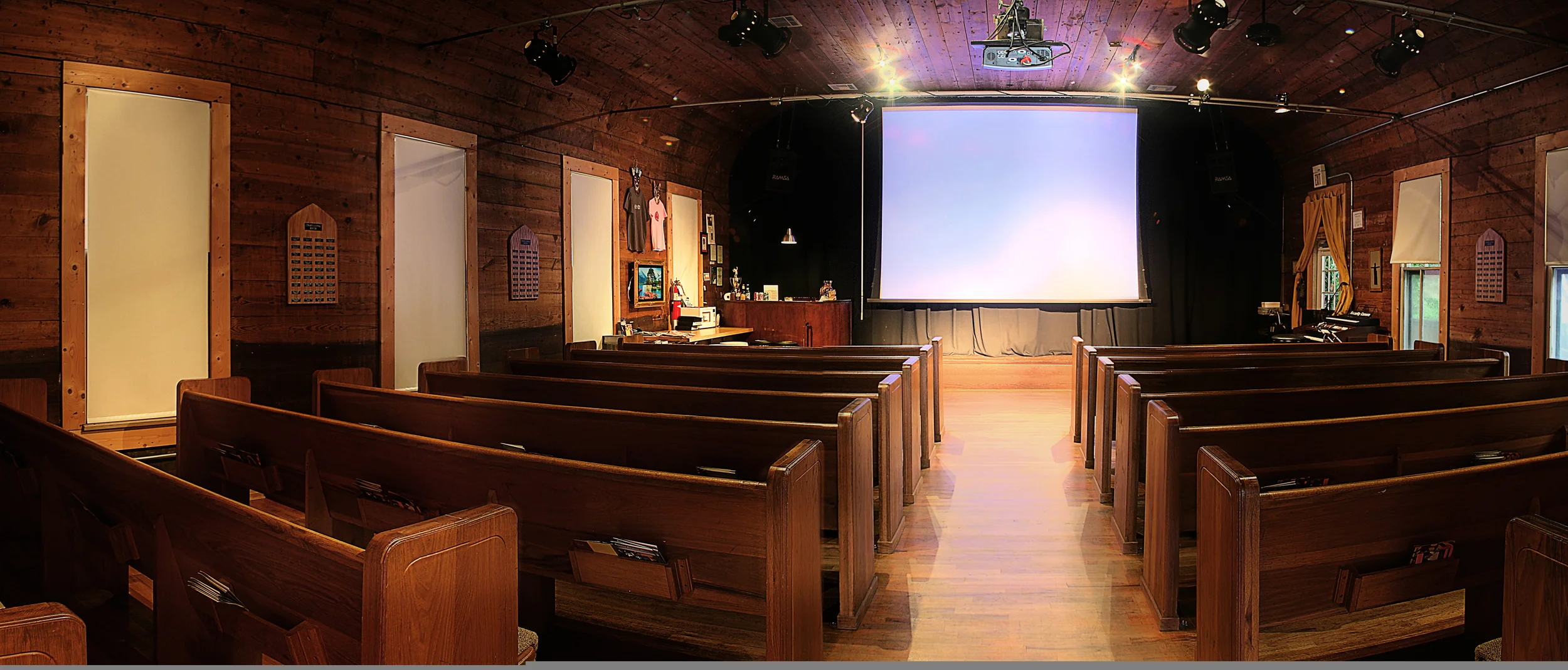
Founded in 1998 by Andrea Grover, the first home for Aurora Picture Show was Grover's home—a former church building on Aurora Street in the Heights neighborhood of Houston. Under her leadership, Aurora established the Aurora Award honoring pioneers of moving image art, the Aurora Video Label, the Aurora Video Library, and the annual Media Archeology Festival. A core value of Aurora continues to be partnership and collaboration with other arts institutions like the Menil Collection, the Contemporary Arts Museum, Houston, and the Museum of Fine Arts Houston, as well as dozens of nonprofits, civic groups, and citywide businesses. Aurora was invited into the prestigious Warhol Initiative program of The Andy Warhol Foundation for the Arts, and is regularly awarded major grants from Brown Foundation, Houston Endowment, National Endowment for the Arts, Andy Warhol Foundation for the Arts, among many others.
Now entering its eighteenth year, Aurora has distinguished itself as a home for vanguard work that falls outside of conventional moviemaking. Aurora’s screenings are known for being singular not-to-be-missed events—from video projections on grain silos to one night only drive-in movies to screenings aboard boats or in swimming pools—Aurora continues to create unforgettable cinematic experiences.
Photos: Aurora Picture Show original cinema, 2007. Photo by Kenny Haner.
Luke Savisky, E/X, presented at Media Archeology Festival, 2010. Photo by Camilo Gonzalez.
Floating Cinema on Buffalo Bayou, 2006. Photo by Jim Caldwell.
Quintron & Miss Pussycat performing at Media Archeology Festival: Below-Fi, 2007. Photo by Steve Patlan.
Shauna Moulton performing at Media Archeology Festival: Live & Televised, 2008. Photo by Steve Patlan.
Tara Mateik performing at Media Archeology Festival: Live & Televised, 2008. Photo by Steve Patlan.
Phantom Captain
Phantom Captain: Art and Crowdsourcing
apexart, NYC
Oct 18—Nov 25, 2006
Curated by Andrea Grover
Projects and participation by:
Jeff Howe, Peter Edmunds,
Harrell Fletcher and Miranda July,
Aaron Koblin, Davy Rothbart,
Allison Wiese
Phantom Captain explores creative collaboration that involves groups of individuals responding to “crowdsourcing” initiatives set forth by artists. Jeff Howe introduced the term crowdsourcing in his June 2006 Wired magazine article, “The Rise of Crowdsourcing,” to describe a new form of corporate outsourcing of labor to armies of amateurs. As the methodology behind websites like Wikipedia, Ebay, Flickr, Youtube, Blogger, etc., crowdsourcing is becoming common practice in business while its potential is also being harnessed by artists to create communal artworks.
Through assignments, collections, solicited submissions, and even the farming out of creative tasks like drawing and decision making, the artists in Phantom Captain create works of “distributed creativity,” employing 10-10,000, geographically dispersed, voluntary collaborators who collect, submit, vote, perform, or otherwise contribute to create discrete, multiple, and ongoing art works. The effect is an exploration of a crowd’s aptitude for creative consensus, rendering something akin to a portrait of contemporary collective unconscious.
Pictured:
Harold Fletcher and Miranda July, Learning to Love You More, Assignment #20: Take a picture of strangers holding hands, 2005.
Aaron Koblin, The Sheep Market, 2006.
Peter Edmunds, Swarm Sketch, 2006.
Never Been to Tehran
2007. Co-organized with Jon Rubin
Exhibition sites: Parkingallery, Tehran, Iran Caravansarai, Istanbul, Turkey; San Francisco Arts Commission Gallery, San Francisco, USA; Media and Interdisciplinary Arts Center, Auckland, New Zealand; Koh-I-Noor, Copenhagen, Denmark; Mess Hall, Chicago, USA; Pittsburgh Cultural Trust (Downtown Electronic Jumbotron), Pittsburgh, USA; Embryosalon, Berlin, German.
Participants: Dean Baldwin, Canada; Aideen Barry, Ireland; Cedric Bomford, Canada; Otto Von Busch, Sweden and Turkey; James Charlton, New Zealand; Sara Graham, Canada; Andrea Grover, USA; Deniz Gul, Turkey; Levin Haegele, England; Greg Halpern and Ahndraya Parlato, USA; Rumana Husain, Pakistan; Jun'ichiro Ishii, France; Martin Krusche, Austria; Rosie Lynch, Germany; Francesco Nonino, Italy; Elena Perlino, Italy; Heidi Hove Pedersen, Denmark; Sal Randolph, USA; Alia Rayyan, Israel/Palestinian Territories; Jon Rubin, USA; Jakob Seibel, Germany; Iyallola Tillieu, Belgium; Keiko Tsuji, Japan; Lee Walton, USA; Lindsey White, USA; Christian Sievers, Germany; Zoe Strauss, USA.
Imagine a city that you've only seen in reproductions or perhaps have merely heard about. A place, like many others, that only exists for you through indirect sources--the nightly news, hearsay, literature, magazines, movies, and the Internet. Using these secondhand clues as firsthand research materials, invited worldwide participants--who have Never Been to Tehran--will take photographs (from their home base) of what they imagine Tehran to look like. Contributors will upload their photos daily to an on-line photosharing site, which will be projected as a slideshow simultaneously in galleries and public spaces around the world (including Tehran). Anything that anyone might take a photograph of is fair game, just as long as it feels like Tehran.
For the international contributors to this exhibition, the task is to search through their daily lives for clues to a foreign place, for the possibility that somewhere else exists right under their noses and that, like some clunky form of astral projection, one can travel to other lands without leaving home. New information technologies are expanding the possibility of knowing a place to which you've never traveled. Hosts of amateur and commercial websites and podcasts about a given city, its economy, demographics, culture and subculture have opened the way for a new vernacular of representation. As Tehran's image is regularly depicted in the dominant media, it is a compelling challenge for the participants in this exhibition to sift through the glut of images and information to cull out a personally constructed version of an unfamiliar place. For viewers in Tehran, the exhibition presents a chance to witness an unusual mirroring of their globally projected image, taken from the daily lives and environs of outsiders.
Collectively, the artists and viewers of Never Been to Tehran will be charting a liminal space stuck somewhere between here and there that in our contemporary existence just might be home.
Andrea Grover and Jon Rubin
Co-organizers